
"Zhu Kula"
90 article(s) found

The respective expressions and questions of the introduction years of Zhukula Coffee in Chinese Coffee Culture
1.1 I remember that it was still the spring of 1995, when Professor Mao Genhai of the former South China Hot farming Academy and I went to Xishuangbanna, Yunnan Province. I had the honor to see Huang Junxiong and Zhang Xingcan, Institute of Tropical and Subtropical Coffee, Yunnan Academy of Agricultural Sciences, published a paper on the development of Yunnan coffee in 1994 in the third issue of Tropical crop Science and Technology, from which we got the information about the earliest introduction of Yunnan coffee.

History of Coffee planting in the early stage of Coffee introduction and expansion in China (2)
1. The presentation of the respective expressions and questions of Zhu Kula Coffee 1.1 I remember that it was still the spring of 1995, when Professor Mao Genhai of the former South China Hot farming Academy and I visited Xishuangbanna, Yunnan Province. I had the honor to see the review and prospect of Yunnan coffee development published in the third issue of Tropical crop Science and Technology in 1994 by Huang Junxiong and Zhang Xingcan, Institute of Tropical and Subtropical Economic crops, Yunnan Academy of Agricultural Sciences
Yunnan Coffee A hundred-year Coffee Legend in Zhukula Village, Dali, Yunnan
Zhu Kula, located in the depths of the mountains in the northeast of Pingchuan Town, Binchuan County, Yunnan Province, is the junction of Chuxiong, Dali and Lijiang, surrounded by the Yupao River, a tributary of the Jinsha River. Due to inconvenient transportation, Zhu Kula is almost isolated from the rest of the world, so it is a little-known Yi shanzhai. When it comes to the history of Chinese coffee, we have to mention Zhukula Coffee in Dali, Yunnan.

The Origin of Yunnan small-grain Coffee
The origin of Yunnan small-grain coffee: in 1892, the French preacher Father Tian succeeded in experimenting with growing coffee in a place called Zhu Kula in Yunnan. To the city of Guzhu Kula, there are still 24 coffee trees with more than 90 years old. Zhu Kula is a mysterious, colorful and natural village, attached to the Zhukula Village Committee, Pingdi Town, Binchuan County, Dali Prefecture, located in the trunk of the Jinsha River.

General knowledge of Fine Coffee cultivation of small Coffee in Yunnan
The origin of Yunnan small-grain coffee: in 1892, the French preacher Father Tian succeeded in experimenting with growing coffee in a place called Zhu Kula in Yunnan. To the city of Guzhu Kula, there are still 24 coffee trees with more than 90 years old. Zhu Kula is a mysterious, colorful and natural village, attached to the Zhukula Village Committee, Pingdi Town, Binchuan County, Dali Prefecture, located in the trunk of the Jinsha River.

The History of Coffee Development in China there is a first coffee village in China deep in the mountains.
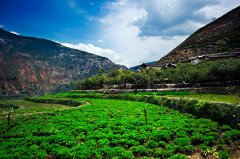
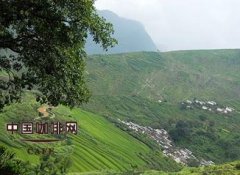
The terraced fields of Zhukula village. The mountain of red sandstone soil in Chuxiong Yi Autonomous Prefecture of Yunnan Province is magnificent. In the beautiful Zhukula village, the green plants that surround the village are coffee trees. The two-story house is the ecclesiastical school in the village a hundred years ago. On the banks of the Yupao River, a tributary of the Jinsha River, there is a picturesque but little-known minority village in Yunnan, Zhu Kula. Because of this remoteness
The Origin of Yunnan Coffee
In 1892, French missionary Father Tian succeeded in growing coffee in a place called Zhukula in Yunnan. Up to now, there are still 24 coffee trees which are more than 90 years old in Zhukula Township.
Chinese Coffee Culture the Legend of Coffee in Zhukula Village, Yunnan Province
When it comes to the history of Chinese coffee, we have to mention Yunnan Dali Zhukula Coffee, which plays a vital role in the history of Chinese coffee. The ancient coffee forest in Zhukula Village is a unique variety of small-grain coffee in Yunnan. It is very rare and of excellent quality. It can be called a living fossil of Chinese coffee. We went to explore the century-old coffee legend of Zhukula village. Zhu Kula, located in Yunnan Province

Common sense of Coffee Culture Coffee Legend of Zhukula Village in Yunnan Province
When it comes to the history of Chinese coffee, we have to mention Yunnan Dali Zhukula Coffee, which plays a vital role in the history of Chinese coffee. The ancient coffee forest in Zhukula Village is a unique variety of small-grain coffee in Yunnan. It is very rare and of excellent quality. It can be called a living fossil of Chinese coffee. We went to explore the century-old coffee legend of Zhukula village. Zhu Kula, located in Yunnan Province
The History of Coffee in China the Biography of Coffee in Zhukula Village, Yunnan Province
When it comes to the history of Chinese coffee, we have to mention Yunnan Dali Zhukula Coffee, which plays a vital role in the history of Chinese coffee. The ancient coffee forest in Zhukula Village is a unique variety of small-grain coffee in Yunnan. It is very rare and of excellent quality. It can be called a living fossil of Chinese coffee. We went to explore the century-old coffee legend of Zhukula village. Zhu Kula, located in Yunnan Province

The History and Origin Story of Yunnan Sapin Coffee. How about Sipin Coffee? is it good?
Professional coffee knowledge exchange more coffee bean information please follow the origin of coffee workshop (Wechat official account cafe_style) ● in 1892, French missionary Father Tian successfully tried to grow coffee in a place called Zhukula in Yunnan. Up to now, there are still 24 coffee trees which are more than 90 years old in Zhukula Township. Zhu Kula is a mysterious, legendary and beautiful natural village, belonging to Dali.

The History of Chinese Coffee Coffee in Zhukula Village, Yunnan Province
When it comes to the history of Chinese coffee, we have to mention Yunnan Dali Zhukula Coffee, which plays a vital role in the history of Chinese coffee. The ancient coffee forest in Zhukula Village is a unique variety of small-grain coffee in Yunnan. It is very rare and of excellent quality. It can be called a living fossil of Chinese coffee. We went to explore the century-old coffee legend of Zhukula village. Zhu Kula, located in Yunnan Province

The Legend of Coffee in Zhukula Village, Dali, Yunnan Province
When it comes to the history of Chinese coffee, we have to mention Yunnan Dali Zhukula Coffee, which plays a vital role in the history of Chinese coffee. The ancient coffee forest in Zhukula Village is a unique variety of small-grain coffee in Yunnan. It is very rare and of excellent quality. It can be called a living fossil of Chinese coffee. In today's program, we will explore the century-old coffee legend of Zhukula Village. Zhu
History of Coffee in China the Legend of Coffee in Zhukula Village, Dali, Yunnan
When it comes to the history of Chinese coffee, we have to mention Yunnan Dali Zhukula Coffee, which plays a vital role in the history of Chinese coffee. The ancient coffee forest in Zhukula Village is a unique variety of small-grain coffee in Yunnan. It is very rare and of excellent quality. It can be called a living fossil of Chinese coffee. In today's program, we will explore the century-old coffee legend of Zhukula Village. Zhu

Yunnan Coffee-Yunnan Coffee-Yunnan Coffee
In 892, Father Tian, a French missionary, successfully planted coffee in a place called Zhukula in Yunnan Province. Up to now, there are still 24 coffee trees growing in Zhukula Township, which are more than 90 years old. Zhukula is a mysterious, legendary and beautiful natural village. It belongs to Zhukula Village Committee of Pingchuan Town, Binchuan County, Dali Prefecture. It is located on the bank of Yupao River, a tributary of Jinsha River. It is a Dali Prefecture, Chuxiong Prefecture and Lijiang City

Drink a cup of coffee and listen to a life story.
Deep in the mountains northeast of Hirakawa town in Binchuan, there is a place called Zhu Kula, which is a little-known Yi shanzhai. Due to the inconvenient transportation, Zhu Kula is almost isolated from the world. The villagers went to the market to buy a pig to carry back to raise, but there was no way to sell it when they were raised. During the Cultural Revolution, a young revolutionary came here. Seeing the winding and steep mountain road here, they had to write on the stone wall.
Coffee Culture the Biography of Coffee in Zhukula Village of Yunnan Province
When it comes to the history of Chinese coffee, we have to mention Yunnan Dali Zhukula Coffee, which plays a vital role in the history of Chinese coffee. The ancient coffee forest in Zhukula Village is a unique variety of small-grain coffee in Yunnan. It is very rare and of excellent quality. It can be called a living fossil of Chinese coffee. We went to explore the century-old coffee legend of Zhukula village. Zhu Kula, located in Yunnan Province

Yunnan Coffee: exploring the Legend of Centennial Coffee in Zhukula Village, Yunnan small Coffee
Professional coffee knowledge exchange more coffee bean information Please follow Coffee Workshop (Wechat official account cafe_style) Coffee is one of the most popular drinks in the world, the most commercially valuable varieties are Arabica and Robst. In this paper, Yunnan Arabica coffee and Indian Robster coffee were selected as the representatives of the two species, and two kinds of coffee with different roasting degrees were studied.
What kind of coffee beans are the small grains produced in Yunnan, China? Yunnan Coffee Bean Iron pickup and Alibika
Yunnan small-grain coffee, Rubiaceae, coffee genus, the planting area is mainly distributed in Lincang, Baoshan, Simao, Xishuangbanna, Dehong, Nujiang and other states. Small grains of coffee are native to Ethiopia or Arabian Peninsula. It is cultivated in Fujian, Guangdong, Hainan, Guangxi, Sichuan, Guizhou and Yunnan. The superior geographical conditions have led to the rapid development of the coffee industry in Yunnan. In 2014, no matter the planting area
Cultivation of small Coffee in Yunnan
Small-grain coffee is suitable for living in mountains with an altitude of 800 to 1800 meters. If the altitude is too high, it will taste sour, and if it is too low, it will taste bitter. Small grains of coffee are mostly planted in dry and hot valleys at an altitude of 1100 meters above sea level, so they are moderately sour, rich and mellow.